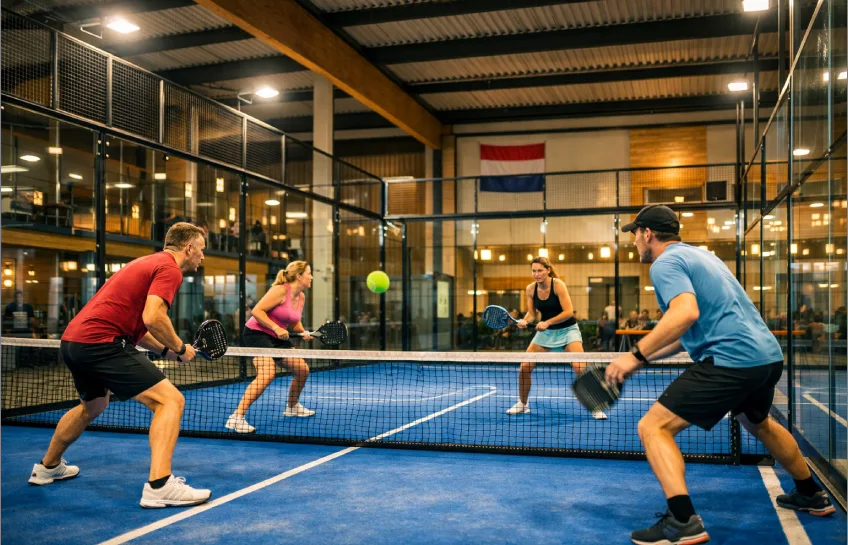
Walk through Rotterdam or Amsterdam today and you’ll hear it — the sharp pop of a padel ball bouncing off glass walls. It’s not tennis. It’s not squash. It’s NLPadel, and it’s taken the Netherlands by storm faster than almost any sport in the country’s recent history.
So what exactly is NLPadel? It’s the shorthand for the entire padel sport movement in the Netherlands — the clubs, courts, players, competitions, and communities that have grown up around the game. According to the Royal Dutch Lawn Tennis Association, over 90,000 people are officially registered padel players in the country, with estimates suggesting more than half a million have picked up a racket at least once.
That’s not a trend. That’s a shift.
What Is NLPadel?
NLPadel stands for Netherlands Padel. “NL” is the internationally recognized abbreviation for the Netherlands, and “padel” is the sport itself. Together, the term describes the whole Dutch padel scene — from local club nights to national tournaments.
It’s not a single official governing body. Think of it more as a cultural identity — a label that Dutch players, clubs, and organizers have adopted to represent their shared passion for the sport.
Padel itself is a racket sport played on a 20×10 meter enclosed court surrounded by glass walls. Teams of two face off against each other, and the walls are a legal part of play — much like in squash. The ball can bounce off them, adding a layer of strategy that keeps rallies going longer than in traditional tennis.
The rules are close to tennis but simpler. Serves are underhand. The court is smaller. And because you’re always playing doubles, the game is inherently social.
How Padel Came to the Netherlands
Padel was invented in Mexico in the 1960s by Enrique Corcuera, who built the first court in Acapulco. The sport spread to Spain and Argentina, where it exploded in popularity — Spain is still considered the world’s padel capital.
The Netherlands came to padel relatively late. Early adoption happened through tennis clubs experimenting with alternative uses for their courts, introducing padel as a side option rather than a main attraction. Expat communities played a role too, bringing the game back from time spent in Spain.
That slow start didn’t last. By the mid-2010s, word-of-mouth had taken over. People tried it, loved it, and brought friends. The glass-walled courts became social hubs as much as sporting venues.
Today, the Netherlands has over 700 padel courts spread across more than 600 locations — and that number keeps growing. Participation has jumped 150% over the past two years alone.
Why NLPadel Grew So Fast
A few things lined up perfectly for padel in the Netherlands.
The sport is easy to pick up. Unlike tennis, which demands years of practice before a rally feels satisfying, padel delivers fun almost immediately. The enclosed court keeps the ball in play longer. Beginners can enjoy a real match within their first few sessions.
It fits Dutch lifestyles. The Netherlands already has a culture built around cycling, walking, and active leisure. Padel slots in naturally — a 60-minute doubles match works on a lunch break or after work. You don’t need to block out half a Saturday.
It’s built for groups. The doubles format means you need at least three other people, which makes it a natural social activity. Office groups, friends, families — padel works for all of them. Local leagues in smaller towns now draw entire neighborhoods for weekend games.
Indoor courts mean year-round play. The Dutch climate is unpredictable. The fact that many padel facilities are indoors removes the weather barrier that limits outdoor sports.
The NLPadel Community: Who’s Playing
One of the things that sets NLPadel apart from other sports is how inclusive it actually is — not just in marketing language, but in practice.
- Recreational players make up the largest group. They play for the social element and the workout, not trophies.
- Competitive players participate in club leagues and regional tournaments, working toward national rankings.
- Youth players are entering through school programs and club academies, with structured sessions designed for children and teens.
- Older players find padel gentler on the joints than tennis or squash, making it a realistic long-term sport option.
Youth development has become a priority. Many clubs now run junior programs, and some schools have added padel to their PE curriculum. That investment in the next generation is what separates a sporting craze from a lasting fixture.
Health Benefits of Playing Padel
Playing padel regularly delivers a solid workout — without feeling like one.
A typical hour of padel burns between 400 and 600 calories, depending on intensity and player fitness level. The stop-start nature of the game — sprinting, pausing, lateral movement — provides interval-style cardio that’s effective for cardiovascular health.
Beyond the physical, the mental benefits are real too. The tactical element of using the walls, reading your opponents, and coordinating with your partner keeps your brain engaged throughout. Research consistently links regular team sports participation with lower rates of anxiety and depression.
And because padel is always played in doubles, every session involves social interaction. That post-match drink with your partner and opponents isn’t an afterthought — it’s part of the culture.
How to Get Involved in NLPadel
Getting started is straightforward. Here’s what to do:
- Find a local court. With over 600 padel locations across the Netherlands, there’s almost certainly one near you. Many are attached to existing tennis clubs or sports centers.
- Book an introductory session. Most clubs offer beginner lessons where you’ll get racket rental included. You don’t need to own equipment to start.
- Join a social league. Once you’ve got the basics, recreational leagues are the best way to improve quickly and meet other players.
- Follow NLPadel online. Dutch padel communities are active on social media. Hashtags like #NLPadel surface local events, tips, and match opportunities.
- Get your own gear. A decent beginner padel racket costs between €50 and €100. Non-marking court shoes are essential — regular trainers will damage indoor court surfaces.
If you’re outside the Netherlands and curious about padel, the NLPadel movement is a useful reference point for how an organized community can build a sport from near-zero into a mainstream activity within a decade.
NLPadel’s Economic Impact
The numbers tell a clear story. Hundreds of new courts mean construction projects, jobs, and ongoing maintenance contracts. Equipment sales — rackets, balls, shoes, sportswear — represent a growing retail segment.
Event organization is another major driver. Local tournaments draw spectators, fill nearby cafés, and create advertising opportunities for local businesses. Coaching has become a profession in its own right, with certified padel coaches now in demand at clubs across the country.
Nationally, padel’s growth has attracted sponsors and media attention that accelerates the cycle further. International tournaments hosted in the Netherlands bring in players and fans from across Europe.
The Road Ahead for NLPadel
The trajectory is clear. With youth programs feeding a new generation of players, infrastructure continuing to expand into smaller towns and villages, and international competition raising the profile of Dutch padel, NLPadel is on track to become one of the country’s top recreational sports.
The challenge now is sustaining the quality that made it popular in the first place — well-maintained courts, good coaching, and a community culture that stays welcoming as the numbers grow.
If you haven’t tried padel yet, the NLPadel community has made it easier than ever to start. There’s a court near you. There’s a session this week. All you need to do is show up.