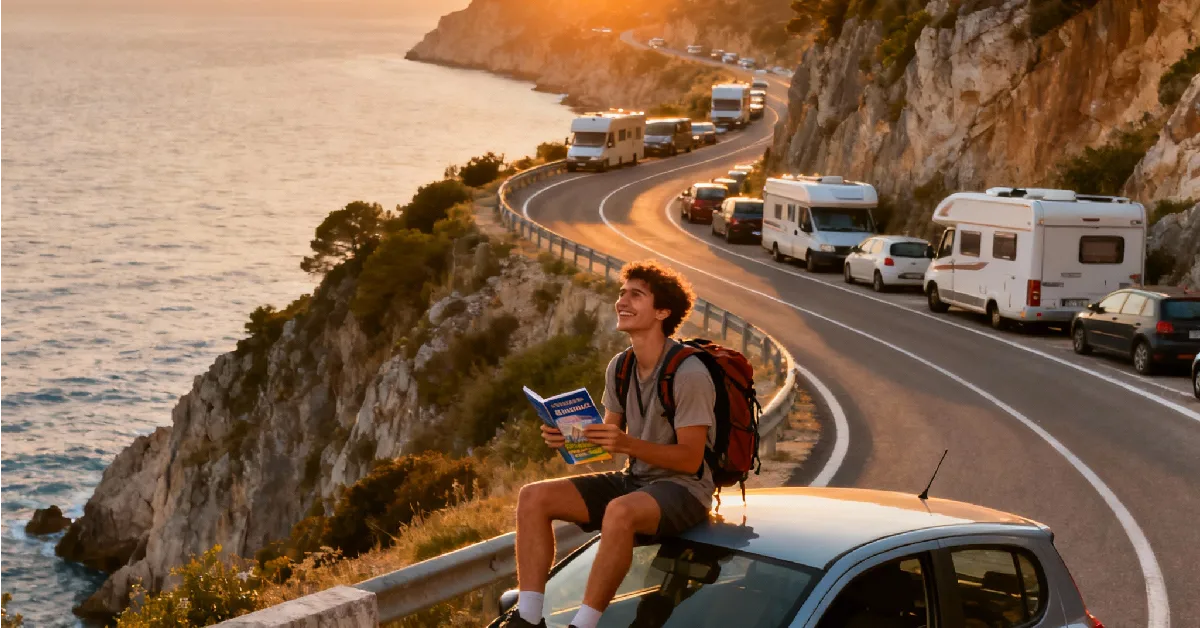
Thousands of travelers skip expensive guided tours and tackle Europe independently each year. The truth? You can absolutely do it on ten grand. The trick isn’t luck—it’s strategy, timing, and knowing where to cut costs without sacrificing the experience.
A three-month European road trip on a budget requires discipline, but it’s entirely achievable. You’ll need to focus on regions where daily expenses run low, like Eastern Europe and the Balkans. This guide breaks down real numbers, proven tactics, and honest route planning so you can actually make this happen.
Your Budget Reality Check
Here’s the hard truth: $10,000 for ninety days breaks down to roughly $111 per day. That’s tight, but not impossible. Your daily rate actually stretches further in cheaper regions—think Bulgaria, Albania, and Poland—where $40 to $65 covers accommodation, food, and activities combined.
The realistic cost breakdown typically exceeds your $10k target by 15-20% when accounting for unexpected expenses. Most travelers need to make strategic adjustments to stay within limits. The key is understanding where money actually goes. Transportation eats 52% of most budgets, accommodation takes 24%, food consumes 29%, and miscellaneous costs claim the remaining 14%.
Your biggest expense isn’t fancy hotels—it’s getting around. Long-term car rental or lease typically costs €2,200–2,500 for ninety days, while fuel for 12,000–13,000 kilometers runs approximately €1,344. Add tolls, vignettes, parking, and ferry crossings, and transportation easily swallows half your budget.
The Geography Hack: Why Eastern Europe Wins
Spending 60–70% of your time in Eastern Europe and the Balkans saves roughly €2,000–3,000 over three months. Daily costs there run 40–50% lower than Western Europe. This single decision makes or breaks your budget.
Your route structure matters enormously. A recommended ninety-day structure includes Month 1 (30 days): Germany → Austria → Czech Republic → Hungary → Romania at €55 daily budget; Month 2 (25 days): Bulgaria → Greece → Albania → Montenegro → Croatia → Slovenia at €65 daily; Month 3 (20 days): Portugal → Spain → Southern Italy at €75 daily.
Start in Central Europe, work your way through the Balkans, then finish in Mediterranean countries. This progression lets you adapt spending as you get comfortable with budget travel. You’ll also hit most iconic destinations without rushing or overspending.
Transportation: The Strategic Approach
Consider Citroën’s short-term lease program for better rates than traditional rentals, offering new vehicles for 15–355 days with comprehensive insurance included and no one-way fees within France. For ninety days, expect €2,500–2,800 total. Traditional rentals from AVIS, Enterprise, or SIXT run €70–100 daily for small vans.
Fuel strategy matters more than most travelers realize. European fuel prices vary dramatically—fill up in cheaper nations like Poland (€1.36/L) and avoid expensive stops in the Netherlands (€1.90/L) or Denmark (€1.93/L). Budget roughly €1,400 for 13,000 kilometers assuming normal fuel consumption rates.
Smart routing avoids expensive tolls. Major toll expenses include France’s autoroutes (€120 Paris-Marseille), Italy’s autostradas (€68 Milan-Bari), and Austria’s vignette system (€96 annually). Secondary roads save €200–300 but add travel time. Most Eastern European countries have minimal tolls, making Balkans routes significantly cheaper overall.
Accommodation: Camping Is Your Secret Weapon
Camp 65–70 nights at €18/night average (€1,170) and stay in hostels 25 nights at €28/night (€700). This split approach keeps accommodation costs realistic while mixing comfort levels throughout your journey.
Regional accommodation costs vary wildly. Albania offers hostels from $10/night and hotels from $20/night, while Bulgaria has hostels from $8/night; Serbia, Bosnia & Herzegovina, and Lithuania provide exceptional value at €10–15 for quality dorm beds and €20–30 for private rooms.
Using the ACSI camping card provides discounts of €5–12 per night at over 2,900 participating sites. This membership essentially pays for itself after a few stays. Camping costs range dramatically by region: Albania and Bulgaria run €8–15/night, while Italy and Croatia average €30–40/night.
Apps help tremendously. Park4Night, Campercontact, and iOverlander help identify legal overnight parking spots with user reviews indicating tolerance for sleeping. These tools prevent wasted time searching and keep you safe while sleeping rough.
Food Strategy: Eat Like Locals, Not Tourists
Self-cater 60% of meals using local markets. Allocate roughly €13 daily for groceries and €10 for eating out. Shopping at local markets provides authentic experiences while saving serious money. Eastern European countries offer incredible value—a full meal in Poland costs what an appetizer might in Switzerland.
Budget-friendly options include street food and kebabs (€4–6), bakery sandwiches (€3–8), pizza slices in Italy (€2–4), and local supermarket meals (€5–10 in Eastern Europe). The Too Good To Go app provides excess restaurant food at significant discounts and worked particularly well in Switzerland, Netherlands, and Austria according to budget travelers.
Skip tourist-area restaurants entirely. Eat where locals eat—small family-run places near neighborhoods, not city centers. Shop at Lidl and Aldi supermarkets for budget basics. Pack snacks and water bottles to avoid convenience store markups that drain budgets surprisingly fast.
Timing: Shoulder Seasons Change Everything
Travel during April–May or September–October for 25–40% accommodation savings compared to peak summer months. Shoulder seasons offer pleasant weather, fewer crowds, and significantly lower prices across accommodation, attractions, and fuel costs. This timing decision alone saves €800–1,200 over three months.
Peak season (July–August) brings triple prices in popular destinations and accommodation that books out weeks in advance. Crowds at major landmarks become overwhelming, and toll roads experience increased congestion. Winter (December–February) offers the deepest discounts—up to 50% below summer rates—though some attractions have limited hours.
How To Plan A Road Trip Across Europe On A $10k Budget: The Formula
Spend 70% of time in Eastern Europe and Balkans where costs are 40–50% lower than Western regions. Camp 72% of nights instead of hotels to save €1,500. Self-cater 60% of meals using local markets and supermarkets. Travel during shoulder seasons (April–May, September–October) for accommodation savings. Use alternative routes to avoid expensive tolls throughout your journey. Book transportation 2+ months in advance for better rates. Focus on free attractions like walking tours, public gardens, and historic city centers. Stay 3–4+ nights in each destination to reduce packing and unpacking time constantly.
Visa, Insurance, and Safety Essentials
Non-EU citizens traveling to the Schengen Zone can stay for maximum 90 days per 180-day period; as of October 12, 2025, the new Entry/Exit System (EES) requires non-EU nationals to provide passport information, facial images, and fingerprints at entry.
Travel insurance is now mandatory with minimum €30,000 medical coverage as of 2025. Verify whether your credit card provides rental car coverage before booking—many do, potentially saving €1,350–2,700 over ninety days in collision damage waiver fees.
The primary theft risk for European travelers is petty theft rather than violent crime; cities like Barcelona, Rome, and Paris have higher pickpocketing incidents, particularly on public transport and in crowded tourist areas. Keep valuables hidden, park in well-lit areas, and research neighborhoods before visiting after dark.
Making It Actually Work
Real travelers complete this journey annually by embracing budget-conscious choices as features, not limitations. The constraint forces discovery of authentic local experiences and genuine cultural connections beyond typical tourist trails. Three months allows slow travel where you develop relationships with vendors at weekly markets and discover hidden Mediterranean swimming spots.
How to plan a road trip across Europe on a $10k budget comes down to one thing: intentional choices. You won’t stay in luxury hotels or dine constantly at upscale restaurants. But thousands of travelers prove it’s absolutely doable. The investment yields memories and experiences far exceeding monetary value—the true measure of travel success.
Ready to book that first tank of gas?