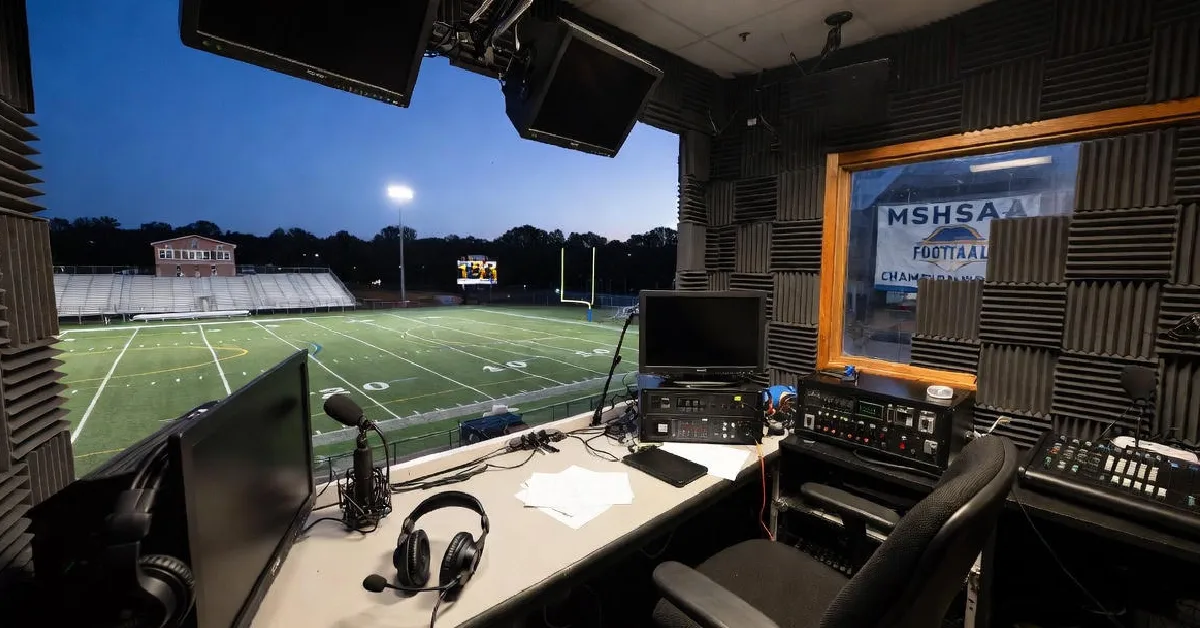
On December 6, 2024, the Missouri State High School Activities Association (MSHSAA) made an extraordinary decision during a live championship broadcast. Color commentator Cam Thomas was removed from the booth at halftime of the Class 6 state football championship between Nixa and De Smet Jesuit—a moment that sparked national conversations about broadcast standards in high school sports. MSHSAA Executive Director Dr. Jennifer Rukstad then delivered a rare on-air apology, acknowledging that the first-half commentary crossed professional lines. This incident exposed vulnerabilities in how high school athletics get covered and reminded everyone that student athletes deserve neutral, respectful coverage regardless of which school they represent.
What Happened During the MSHSAA Championship Broadcast?
The matchup itself was significant. Nixa, a public school from southwest Missouri, faced De Smet Jesuit, a private Catholic institution from St. Louis, at Faurot Field in Columbia for the Class 6 title. De Smet would ultimately win 35-20, but the final score wasn’t what made this game memorable. Play-by-play announcer James Stanley and color commentator Cam Thomas were calling the action for MSHSAA.tv when things went wrong early.
During the first half, Thomas’s commentary heavily favored De Smet while appearing dismissive toward Nixa. Social media lit up with complaints almost immediately. Parents, fans, and students flooded Facebook and X with posts pointing out the unprofessional nature of his analysis. The bias was so pronounced that it became impossible to ignore—this wasn’t casual hometown favoritism, it was something that broke the basic rules of sports broadcasting.
What made this worse? The private-versus-public school divide in Missouri is a raw nerve. For years, the state has debated whether private schools have unfair recruiting advantages. When a commentator appears to take sides in a championship game, it validates the exact concerns public school supporters have been raising. The broadcast didn’t just feel unprofessional—it felt like it was picking a side in a battle that’s been going on for decades.
MSHSAA responded faster than anyone expected. Rather than waiting until after the game or issuing a statement later, Dr. Rukstad made the call to remove Thomas at halftime. She then went on air at the start of the third quarter to address it directly with viewers.
Understanding the Broadcast Bias Complaint
High school sports broadcasting isn’t the same as professional sports. The National Federation of State High School Associations (NFHS) has clear guidelines: announcers must stay professional, avoid dramatizing unsportsmanlike conduct, and never make destructive criticism of officials. The reason? High school athletics are fundamentally educational. They’re about student development, not entertainment value.
When Thomas delivered biased commentary, he violated these core principles. Viewers weren’t complaining about his enthusiasm or his style—they were flagging actual favoritism toward one school over another. In a championship game watched by families across the state, that kind of bias sends a message. It tells one set of students their school matters less. It validates unfair stereotypes about different types of schools.
The specific complaints centered on how Thomas discussed plays, decisions, and the teams themselves. MSHSAA actually removed the entire broadcast from its website afterward, so the exact comments aren’t available for review. But the volume and consistency of social media complaints made it clear this wasn’t just one upset fan—it was a pattern viewers recognized.
High school broadcasters operate under MSHSAA’s media regulations, which require sponsor approval and adherence to professional standards. Television stations have to arrange coverage ahead of time and follow specific protocols for championship broadcasts. These rules exist for a reason. They protect the integrity of educational athletics and ensure that all teams—public, private, big, small—get fair treatment.
MSHSAA’s Immediate Response and Apology
Here’s what made this moment different. Dr. Jennifer Rukstad didn’t wait for the postgame press conference or issue a formal statement on Monday morning. She pulled Thomas from the booth at halftime and then addressed the broadcast audience directly. This kind of real-time accountability is rare in sports coverage.
At the start of the third quarter, Rukstad delivered her apology to viewers: “I wanted to talk to everyone who purchased this broadcast: We needed to make a change here at halftime. I want you to hear my personal apology about some of the things that were communicated in the first half.” She continued with the core message: “I wanted to let all of our viewers know that our members are all in equal standing. We wanted to let our viewers know that we take our broadcast seriously. We respect all our teams, no matter where they come from.”
That language matters. She didn’t blame Thomas and moved on. She acknowledged that MSHSAA itself had dropped the ball by allowing this commentary to happen in the first place. She also made clear that all member schools—public or private—deserve equal respect. James Stanley finished the broadcast alone for the remainder of the game, delivering solid play-by-play without color commentary.
The decision to remove the entire broadcast from MSHSAA’s website afterward was protective in one sense—it spared the athletes from further exposure to unprofessional coverage. But it also meant viewers couldn’t review exactly what was said. It raised questions about transparency, even as it showed MSHSAA was taking the incident seriously.
Why Does Broadcast Neutrality Matter in High School Sports?
Most people don’t think much about who’s commenting during high school football games. But the voice you hear shapes how you experience what’s happening on the field. A neutral commentator describes plays objectively. A biased one colors your perception before you even know what you’re looking at.
High school students aren’t getting paid. They’re not going to the NFL or Division I. They’re competing for their school, their teammates, and their own development. That makes it even more important that broadcast coverage respects all participants equally. When commentary shows favoritism, it undermines the educational values these competitions are meant to teach.
Think about it from the athletes’ perspective. You’ve trained all season. You’ve made it to the state championship. Your family is watching. Then an announcer spends three quarters essentially telling thousands of viewers that your school doesn’t deserve to be there or that the other team is inherently superior. That’s not just unprofessional—it’s demoralizing.
NFHS guidelines exist because high school organizations recognized long ago that broadcasters have power. They shape narratives. They influence how communities view their schools. Therefore, the standard for high school coverage has to be higher, not lower, than professional sports. Student athletes deserve protection from bias, favoritism, and unprofessional commentary.
The Public vs. Private School Debate in Missouri
Missouri has wrestled with the public-versus-private school competition question for years. Private schools like De Smet, Rockhurst, and others tend to dominate certain sports. Public school advocates argue that private institutions can recruit more selectively and have fewer geographic constraints. Private school supporters counter that public schools have larger enrollment pools to draw from.
MSHSAA tried various approaches to level the playing field. The organization experimented with multiplier systems for years, ultimately moving to a sport-by-sport “competitive coefficient” approach in 2020. The idea was to create brackets that accounted for competitive advantages so that the competition would be fairer. But even with these adjustments, the perception of unfairness persists, especially in the Kansas City area, where certain private schools seem to dominate year after year.
When a commentator appears to favor the private school in a state championship, it doesn’t just upset fans in the moment—it validates the exact concerns that have been brewing for years. It’s like saying the system really is rigged, and here’s a broadcast professional proving it. The bias didn’t just damage Thomas’s credibility; it threatened public trust in MSHSAA’s commitment to fair competition.
That’s why Dr. Rukstad’s immediate response was so important. By removing Thomas and apologizing on air, she sent a signal: MSHSAA takes fairness seriously. The organization won’t tolerate commentary that suggests one type of school is inherently better than another. That matters in a state where this divide has been contentious for so long.
How Social Media Influenced the Outcome
Without social media, this incident probably would have been handled differently—if it gets handled at all. Complaints would have come in after the broadcast. MSHSAA would have reviewed them later. Maybe there’s a statement issued days afterward. Maybe there’s nothing.
Instead, Facebook and X lit up in real time during the first half. Hundreds of viewers were documenting the bias as it happened. That immediate, public pressure forced MSHSAA’s hand. The organization couldn’t ignore it because the complaints were visible, detailed, and consistent. This wasn’t just a few upset fans—it was a widespread recognition that something was wrong.
One article made a funny comparison: if social media reactions were powerful enough to bring back the Snack Wrap at McDonald’s, they were definitely powerful enough to remove an analyst from a broadcast. The point stands. Public pressure through digital platforms creates accountability in ways that simply didn’t exist before. Organizations now have to respond in real time instead of managing situations quietly behind the scenes.
The broader implication is significant for high school sports organizations. Community feedback matters more than ever. Broadcasters can’t assume their words will disappear into the ether. Thousands of people are watching, recording, and sharing instantly. That’s not necessarily a bad thing—it just means higher standards have to be the norm from the start.
What Broadcasting Standards Apply to High School Games?
The NFHS has published clear expectations for high school announcers. Professionalism comes first. Announcers must exhibit impartiality and avoid dramatizing unsportsmanlike conduct. They shouldn’t make destructive criticism of officials’ decisions. Their role is to call the game fairly and emphasize the educational value of what’s happening on the field.
MSHSAA’s own media regulations spell this out further. Broadcast agreements require sponsor approval. Television stations must make prior arrangements and follow specific protocols for championship coverage. These regulations exist to maintain the integrity of educational athletics—they’re not bureaucratic obstacles; they’re guardrails that protect the sport.
High school broadcast standards also differ fundamentally from hometown radio broadcasts. A local station might have a hometown bias toward the community’s team, and fans expect that. But a championship broadcast on MSHSAA.tv is different. It’s being watched statewide by people with no rooting interest. Those viewers deserve impartial coverage. They deserve announcers who respect all teams equally.
Limited public information exists about Cam Thomas’s broadcasting credentials or background. That’s actually a problem worth addressing. MSHSAA didn’t immediately disclose details about his experience or vetting process. The incident raised questions about how the organization selects commentators for high-stakes events. What qualifications do they require? What training do they provide on neutrality? Those are questions the organization should be answering more clearly going forward.
What Changes Might Prevent Future Incidents?
MSHSAA learned a hard lesson here, and they should act on it. Pre-game briefings before championship broadcasts need to emphasize neutrality requirements. Announcers should know exactly what’s expected of them—not just in theory, but explicitly stated before they go on air. A conversation about bias in all its forms would be useful. Real-time monitoring systems could identify bias as it’s happening, allowing for intervention before situations escalate like this one did.
Credential requirements deserve attention, too. MSHSAA should ensure that broadcasters covering high-level events have appropriate experience and understand high school sports ethics. Recording all broadcasts for internal quality review—not necessarily public release—would give the organization tools to evaluate performance and catch problems early. That’s different from policing speech; it’s about maintaining professional standards.
Training on the specific challenges of high school sports coverage would help. Broadcasters need to understand the educational mission they’re serving. They need to know about sensitive topics like public-versus-private school competition in their region. They need tools for recognizing their own biases and correcting for them in real time.
Organizations might also consider clearer consequences for violations. The incident with Kansas NFHS Network announcer Toby Moore in 2024 offers a parallel example. Moore made degrading comments during a girls’ soccer state championship—his hot mic caught him cursing, complaining about the game’s quality, and making inappropriate comments about spectators. NFHS Network fired him. The patterns are similar: live broadcasts, championship games, immediate social media backlash, and swift organizational responses. These incidents show that high school organizations are increasingly recognizing the need to act decisively when broadcast standards are violated.
Community Reaction and Lessons Learned
What should viewers take away from this incident? First, high school athletics exist primarily for student development, not entertainment. When broadcasters lose sight of that mission, they undermine the values these competitions are meant to teach. Second, viewers should expect impartiality from championship broadcasts. That’s not a luxury—it’s a baseline requirement. Regardless of school type, geographic location, or competitive level, all teams deserve neutral coverage.
Parents, coaches, and fans play an active role in holding broadcasters accountable. The incident proved that viewer complaints can lead to real-time corrections, not just after-the-fact apologies. When you notice unprofessional conduct during a broadcast, reporting it matters. Your feedback creates the pressure that forces organizations to act.
The broader lesson applies to all sports organizations, not just MSHSAA. Swift, transparent responses to legitimate concerns can maintain public trust even in challenging situations. Dr. Rukstad’s decision to remove Thomas immediately and apologize on air showed that accountability doesn’t have to be defensive or delayed. It can be direct and honest.
Most importantly, this incident serves as a reminder that student athletes deserve coverage that respects their achievements regardless of which school they represent. Whether you attend a public or private school, whether you’re favored or considered the underdog, you earned your place in that championship game. The commentary should reflect that respect.