What makes a coat so special that it’s been around for over 100 years? The polo coat started on English sporting fields and somehow ended up in every stylish person’s closet. It’s not just another jacket—it’s a piece of history you can actually wear.
About 95% of people recognize the classic camel-colored overcoat, but most don’t know its connection to actual polo players. Back in 19th-century England, athletes needed something warm between chukkers. They got a coat that changed men’s fashion forever.
The Origins of the Polo Coat
The polo coat came from a simple problem. Polo players in 19th-century England got cold between chukkers—the periods when they actually played. Someone smart decided to make them a coat that worked.
The original design was pretty basic. It wrapped around the body and used a belt to stay closed. No buttons. No fancy features. Just pure camel hair wrapped around you to keep the chill away. The wrap style let players throw it on fast between matches.
Camel hair made sense for athletes. It’s warm, it’s light, and it breathes. Players could move around without feeling like they were wearing a sleeping bag. The material came from actual camels, which made these coats expensive even back then.
From Sporting Fields to American Icon
The coat crossed the Atlantic Ocean in the early 20th century. American college kids—especially at Princeton and Yale—saw it and wanted it. By the 1920s, Ivy League students made it their unofficial uniform.
Here’s a wild fact: At the 1929 Yale-Princeton football game, polo coats outnumbered raccoon coats. That’s huge because raccoon coats were the big fashion statement before that. College students dumped their old fur for this new camel-colored coat. It wasn’t just about staying warm anymore—it was about looking good.
The polo coat went from sportswear to status symbol in less than a decade. If you wore one, people knew you had money and style. Brooks Brothers and Ralph Lauren started making them for regular people, not just athletes.
Defining Features of a Classic Polo Coat
You can spot a real polo coat from a block away. It’s got specific features that haven’t changed much in 100 years.
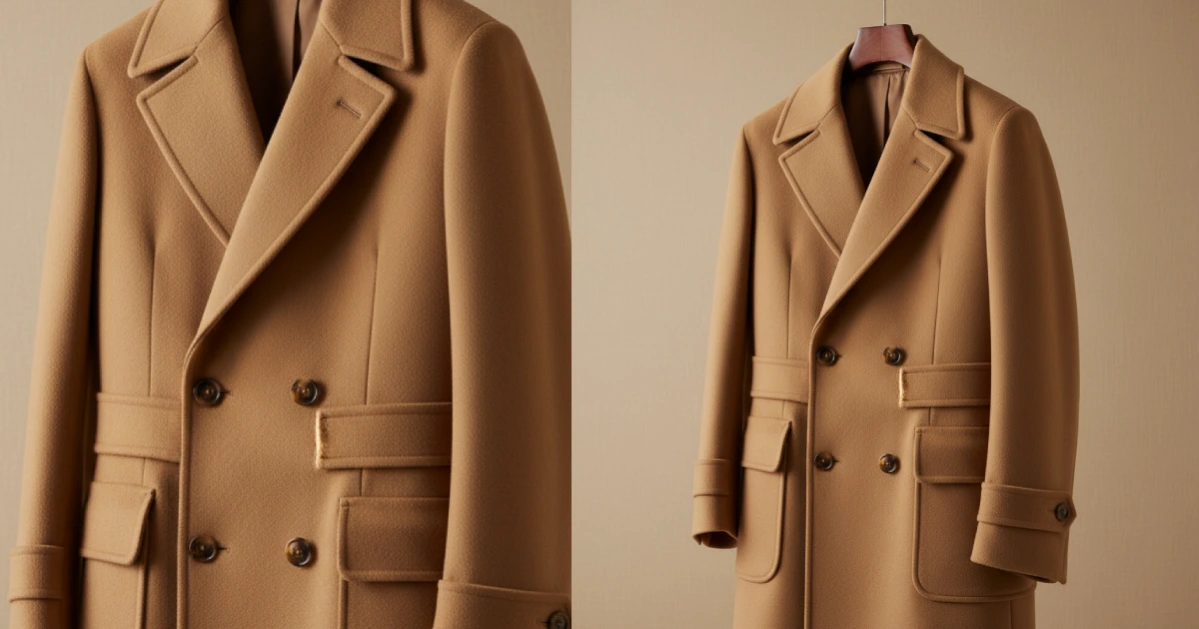
The classic version is double-breasted with six buttons arranged in two rows. It’s called a 6×3 button configuration—six buttons total, three that actually close the coat. The Ulster collar sits high on your neck and gives it that distinguished look. You’ll also see flapped patch pockets on the front, which are more casual than regular coat pockets.
The half-belt at the back is called a martingale. It’s not there to tighten the coat—it’s pure style. Set-in sleeves make the shoulders look structured without being stiff. And the color? Almost always camel or tan. That sandy, warm tone is basically the coat’s trademark.
The fit is loose and comfortable. You should be able to move your arms freely, throw a ball, or swing a polo mallet. That’s the whole point—it started as athletic wear, remember?
Materials and Construction
Traditional polo coats use camel hair fabric. Real camel hair comes from the soft undercoat of Bactrian camels. It’s incredibly warm for its weight and naturally water-resistant.
But here’s the thing—pure camel hair wears out faster than you’d think. Modern versions blend camel hair with wool or cashmere to make them last longer. You get the same warm color and soft feel, but the coat survives more winters. Some brands use 70% camel hair and 30% wool, which hits a sweet spot between authenticity and durability.
Alternative fabrics work too. High-quality wool in camel tones looks almost identical. Some makers use cashmere blends for people who want that extra softness. The key is getting that thick, substantial feel that keeps you warm without making you look bulky.
The construction stays loose and easy. No tight tailoring here. You should be able to wear a suit jacket underneath without feeling squeezed. That’s classic menswear done right.
Style Variations Through the Decades
The polo coat evolved as fashion changed. The original wrap style with a belt gave way to buttoned versions in the 1920s. Buttons made more sense for everyday wear—less fussing around with ties and belts.
Single-breasted alternatives showed up for people who wanted something simpler. Raglan sleeves appeared on some versions, making them easier to put on over bulky sweaters. Different collar styles came and went, but the Ulster collar stuck around as the favorite.
Some coats got full belts instead of the half-belt martingale. Others dropped the belt completely for a cleaner look. Modern minimalist versions cut out the patch pockets and went with regular ones. But the core design—double-breasted, camel-colored, comfortable—stayed the same.
You can find vintage style coats that look exactly like 1930s originals. Or you can grab contemporary fashion versions with slimmer cuts and updated details. Both work. It depends on your style.
How to Style a Polo Coat Today
A polo coat works in business settings and casual ones. That’s its superpower—versatility.
For professional occasions, throw it over a suit. Navy suit, white shirt, simple tie—add the camel coat and you look polished. The contrast between the dark suit and light coat creates a classic look that works in any office. Leather dress shoes and you’re done.
For everyday wear, pair it with a turtleneck and jeans. The coat dresses up casual clothes without making you look like you tried too hard. Add white sneakers or boots depending on the weather. Roll up your jeans slightly to show some ankle—it balances out the coat’s long length.
Seasonal styling matters too. In fall, wear it over lighter layers like oxford shirts. In winter, pile on sweaters underneath. The loose fit handles extra clothes easily. And if it rains? Most wool blends handle light rain fine, though you might want to treat it with a water-resistant spray.
Color Options Beyond Camel
Camel remains the most popular choice. That warm, sandy tone defined the polo coat from the start. It works with almost everything in your closet—jeans, suits, khakis, whatever.
But modern versions come in other colors now. Navy blue gives you a more formal option that still looks classic. Gray works for people who want something neutral but different. Olive green brings some color without going wild. These alternatives let you own multiple polo coats without looking repetitive.
Patterns like houndstooth add visual interest while keeping the traditional aesthetic. Tweed variations give you texture and warmth. Some brands make them in charcoal, chocolate brown, or even black. The key is maintaining that classic polo coat structure—changing the color doesn’t mean losing the style.
If you’re buying your first one, stick with camel. It’s timeless. Once you’ve got that covered, experiment with other tones.
Where to Buy Quality Polo Coats
Heritage brands make the best traditional versions. Brooks Brothers has been producing polo coats since the 1920s. Their versions stay true to the original design with proper construction and quality materials. Expect to pay $800-$1,200 for their coats.
Ralph Lauren Corporation built its reputation partly on polo coats. Polo Ralph Lauren offers several versions from classic to contemporary. Their prices range from $600 to over $2,000 depending on materials and construction. The quality matches the price—these coats last decades.
Contemporary designers put modern spins on the classic. Look for proper double-breasted construction, real wool or camel hair blends, and functional pockets. Cheap versions use thin fabric and skip details like the martingale. You can tell quality by weight—a good polo coat feels substantial when you pick it up.
Price ranges tell you a lot. Under $300 usually means synthetic blends and shortcuts. $500-$800 gets you decent wool versions. Above $800, you’re getting premium materials and better construction. Spend what makes sense for your budget, but don’t expect a $150 coat to last like a $1,000 one.
Why the Polo Coat Remains Timeless
This garment has survived over a century because it nails the fundamentals. It’s warm without being bulky. It’s dressy without being formal. It works over suits or jeans. Not many coats can claim that kind of versatility.
The blend of casual elegance and sophistication hits a sweet spot. You look put-together without looking like you spent three hours getting dressed. The coat does the work for you—throw it on and you instantly look more polished.
Modern men’s wardrobes need pieces that work multiple ways. The polo coat delivers. It transitions from office to weekend, from fall to winter, from thirty years old to sixty. Trends come and go, but this coat stays relevant.
That’s why FashionBeans and other menswear sites keep writing about it. That’s why brands keep making it. And that’s why you should probably own one.
Conclusion
The polo coat earned its place in men’s fashion history. From English polo fields to Ivy League campuses to modern city streets, it adapted without losing what made it special. The camel-colored, double-breasted design works as well today as it did in 1920.
You don’t need a huge wardrobe to look good. You need the right pieces. A quality polo coat is one of those pieces. It’ll outlast trends, survive multiple seasons, and make you look better every time you wear it.
Ready to add one to your closet? Start with a classic camel version from a quality brand. Check the construction, feel the weight, make sure it fits comfortably over a suit. Then wear it everywhere. That’s what it’s made for.