The Western Character Actor Who Made $2 Million Over 46 Years
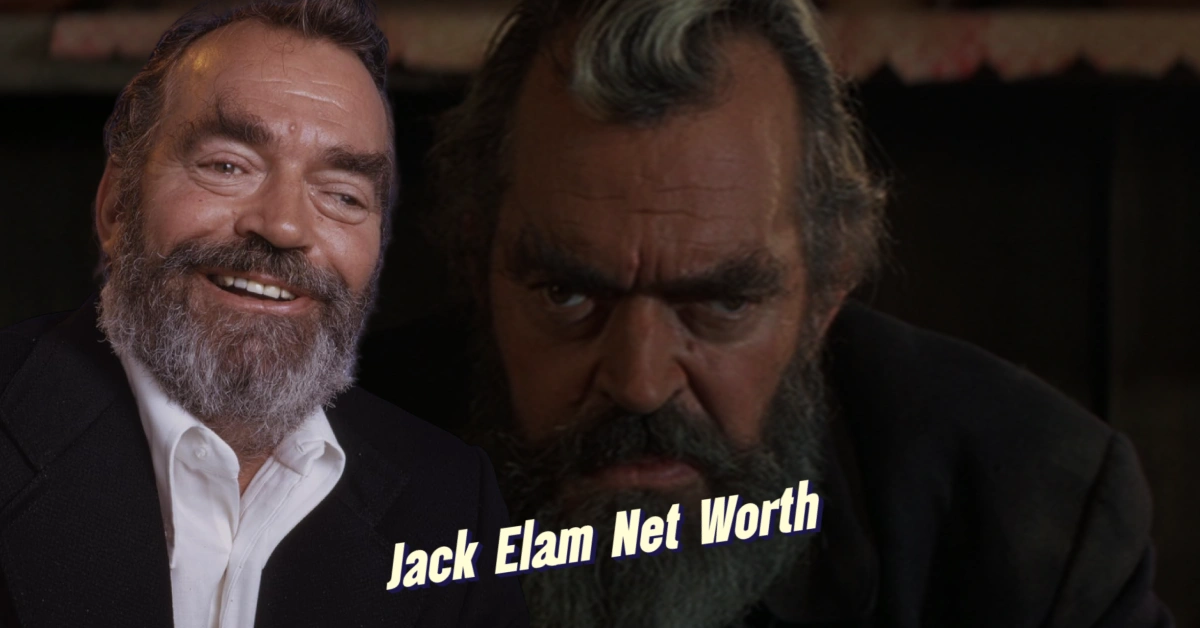
Jack Elam’s net worth at the time of his death in 2003 was $2 million—built over 46 years as a working character actor in 73 films and 41 television series. He wasn’t a superstar or leading man; he was a reliable professional who turned his distinctive misaligned eye and accounting background into a durable career that proved supporting roles could build serious wealth.
Who Was Jack Elam?
William Scott Elam was born in Miami, Arizona on November 13, 1920. He grew up as a Western character actor who defined a specific role type—the screen’s most loathsome villain. His physical appearance made him instantly recognizable. His presence made audiences uncomfortable. He played bad guys so convincingly that decades later, people remembered him for those menacing roles. Yet off-screen, he was devoted to his family, played poker, collected elephant figurines, and never considered acting “work.”
What made Jack Elam different wasn’t just his distinctive look. It was his background. Before Hollywood discovered him, he was a CPA—a certified public accountant. He attended Santa Monica Junior College, worked at the Bel Air Hotel, and served as an accountant for Samuel Goldwyn Studios. This financial background gave him credibility and business acumen that most actors lacked. It also foreshadowed how he’d build his wealth: not through one massive role, but through calculated career management and consistent, smart work.
Jack Elam Net Worth
At the time of his death in October 2003, Jack Elam’s net worth was approximately $2 million. That figure represents his total financial legacy—the accumulation of salaries, residuals, and earnings from nearly five decades as a working actor. To put this in modern context, $2 million in 2003 adjusts to roughly $3.3 million in 2025 dollars, accounting for inflation.
This wealth came from a career trajectory that most Hollywood actors don’t experience. Elam wasn’t a household name. He never commanded leading man salaries. He didn’t star in blockbuster films or headline prestigious television shows. Instead, he worked consistently—appearing in multiple films and television episodes per year throughout the 1950s, 1960s, 1970s, and beyond. That consistency, multiplied across 46 years, created substantial financial security.
Early Life and the Accident That Changed Everything
Jack Elam’s life changed permanently at age 12. During a Boy Scout activity, a pencil accident permanently blinded his left eye. That injury would have ended most careers before they started. Instead, it became his greatest asset. The resulting misaligned eye gave him an unforgettable appearance—something casting directors needed for villain roles. His disability transformed into his earning potential.
His childhood in Miami, Arizona was marked by hardship. His mother died when he was only three years old, leaving his father to raise him. These early difficulties shaped his work ethic and determination. They also grounded him in practical realities—unlike many Hollywood performers, Jack Elam valued financial security and never took employment for granted.
Years later, when doctors warned that his remaining eye risked damage from reading financial documents, he faced another life-changing decision. His accounting career had provided good income and stability, but his health was at risk. That threat forced a career pivot. Cleverly, he leveraged his accounting skills to finance independent films in exchange for acting roles—essentially investing in his own future by becoming an actor. It was a smart financial move that proved foundational to his professional success.
From Accountant to Actor
Before Jack Elam ever appeared on film, he spent years managing the financial side of entertainment. He attended Santa Monica Junior College and became a licensed CPA. He worked as manager of the Bel Air Hotel, handling the complex operations of a major hospitality business. He served as accountant and auditor for Samuel Goldwyn Studios and William Boyd’s Hopalong Cassidy Productions—prestigious positions that gave him insider knowledge of how Hollywood’s financial systems operated.
This accounting background was crucial to his later success as a working actor. Most performers lack financial understanding. They make money and spend recklessly. Elam, with his CPA credentials and years of managing budgets, understood compound wealth, smart savings, and calculating return on investment. When he finally transitioned to acting, he approached his career like a business project—evaluating roles for income potential, understanding residual payments, and building long-term earnings streams rather than chasing one big score.
Breaking Into Hollywood
Jack Elam’s film debut came in 1949. He wasn’t an overnight success. He worked methodically, building his professional reputation through smaller roles and consistent appearances. The breakthrough came with his role in “Rawhide” in 1951—a television production that established him as a reliable villain. The Hollywood system of the 1950s and 1960s favored consistent, specialized character actors. Studios needed villains. They needed supporting characters. They needed actors who could work quickly and deliver memorable performances without requiring star treatment.
What made Elam perfect for this system was his appearance and his work ethic. His distinctive look made him memorable—directors wanted him specifically because his face was instantly recognizable. His background as a professional meant he understood business and treated acting like any other job. He showed up, did the work, collected his paycheck, and moved on to the next project. During peak years, he might appear in multiple films and television episodes in the same calendar year—each one generating income and building toward his long-term financial security.
The Western Villain Years
From the early 1950s through the 1960s, Jack Elam became known as “the screen’s most loathsome character.” He perfected the art of playing menacing villains in Western films. His most iconic role came in Sergio Leone’s “Once Upon a Time in the West” (1968), where he appeared in the legendary opening sequence. He also appeared in “High Noon” (1952) and “Gunfight at the O.K. Corral” (1957)—films that defined the Western genre.
Typecasting as a villain limited his range, but it provided something more valuable: job security. Studios knew what they were getting. Directors specifically requested him. Other actors wanted his roles. The steady income from this era—salaries for film appearances plus television guest spots—formed the financial foundation of his $2 million estate.
Television appearances made his income formula work. He played villains in 15 episodes of “Gunsmoke.” He guest-starred in countless Westerns. Each television appearance generated immediate income and, crucially, residual payments—money he continued earning every time networks reran his episodes. That residual income stream became increasingly valuable throughout his career, providing a financial cushion that transcended any single year’s earnings.
Transition to Comedy
In 1969, Jack Elam’s career took an unexpected turn. Director Burt Kennedy cast him in “Support Your Local Sheriff!” alongside James Garner—a comedic Western that revealed Elam’s previously hidden talent for humor. That single film opened a second revenue stream in his 50s, when most actors’ careers fade. He followed it with “Support Your Local Gunfighter” (1971) and other comedic roles that extended his earning years by two decades.
This transition proved crucial to his wealth accumulation. Instead of retiring or fading from Hollywood, Elam reinvented himself. He discovered that audiences loved him as a comic character—using that same menacing appearance in funny situations. This versatility meant work continued flowing throughout his 60s and even into his 70s. The financial impact was substantial. Those later-career earnings, combined with accumulated residuals, allowed him to build his estate steadily over a longer timeline than typical Western actors enjoyed.
Television Career and Steady Income
Television work provided the consistent income that separated successful character actors from those who struggled. Jack Elam appeared in “The Dakotas” (1962-1963), “Temple Houston” (1963-1964), “The Texas Wheelers” (1974-1975), and “Easy Street” (1986-1987). These series work brought steady paychecks and, more importantly, residual rights that paid him repeatedly whenever episodes aired in syndication.
The residual income system proved essential to building his $2 million fortune. A single television episode might pay $1,500-$3,000 in the 1950s-70s (equivalent to $15,000-$30,000 in 2025 dollars). That episode would air during its original season, generating the initial payment. Then it would go into syndication—getting rerun on local stations across America for decades. Every rerun generated residual payments, however small. Multiply that across 73 films and appearances on 41 television series, with decades of reruns, and the residual income became substantial.
Jack Elam’s Income Sources
Jack Elam’s $2 million net worth came from multiple income streams. The largest component was direct acting income—salaries paid for film and television appearances across 46 years. During peak years in the 1950s-60s, he might earn $15,000-$25,000 annually (equivalent to $150,000-$250,000 in 2025 dollars). That income provided his base wealth accumulation.
Television residuals formed the second major income stream. As his earlier work generated repeated airings, he received ongoing payments. These “residual earnings” weren’t massive per instance—maybe $50-$500 per episode rerun—but they accumulated dramatically over decades. By the 1980s and 1990s, he was receiving regular residual checks from television networks for episodes filmed 20-30 years earlier.
The third income source came from screenwriting. Elam sold a screenplay titled “The Purple Gang” (1959/1960), demonstrating his creative versatility beyond acting. This income was modest compared to his acting work, but it represented another revenue stream and further proof of his professional capabilities. Combined with his accounting background, his business acumen was evident in how deliberately he’d structured his career for maximum financial output.
Personal Life and Family
Despite the demands of Hollywood, Jack Elam remained devoted to his family. He married twice: first to Jean Hodgert (1937-1961) and later to Margaret Jennison (1961-2003). He had three children—Jeri, Jacqueline, and Scott—and by all accounts, he was a present, engaged father despite the irregular hours demanded by acting and television work.
His personal interests humanized his otherwise professional demeanor. He was an avid poker player—a hobby that revealed his analytical mind and comfort with calculated risks. He collected elephant figurines, suggesting a sentimental side beneath his menacing on-screen persona. These details matter because they illustrate that Jack Elam, the man, was fundamentally different from Jack Elam the villain. His financial success came partly from his professional choices, but partly from his personal discipline and judgment about how to live a balanced life.
Awards and Recognition
Jack Elam received significant honors late in his career. The Golden Boot Award (1983) recognized his contributions to Western cinema—he was among the earliest recipients of this prestigious honor. Thirteen years later, in 1994, he was inducted into the National Cowboy Hall of Fame. These recognitions validated what industry professionals already knew: his career-long contributions had been substantial.
While awards don’t directly generate wealth, they serve as markers of professional significance. These honors came during what should have been his decline years (his 60s and early 70s), proving that his reinvention to comedy had succeeded. They also enhanced his resume, making him more valuable to younger filmmakers and television producers who wanted to cast a recognizable legend.
Final Years and Death
In 1987, at age 67, Jack Elam retired to Ashland, Oregon. He lived quietly for 16 years, appearing only once more on screen—in “Bonanza: Under Attack” (1995), his final role at age 75. That appearance demonstrated his continued ability to work, though he’d chosen to step away from the demanding schedule of full-time acting.
He died on October 20, 2003, from congestive heart failure, surrounded by family at his Oregon home. His chosen epitaph captured his philosophy perfectly: “I drank scotch and played poker.” Those few words summarized a man who lived on his own terms, who enjoyed life’s pleasures without pretense, and who never bought into Hollywood’s demand for constant self-promotion.
His estate, valued at approximately $2 million, reflected five decades of intelligent financial management. He’d never been extravagant. He’d never chased fame beyond what his work demanded. He’d treated his acting career as a business—which it was. The result was financial security that outlasted his career.
Jack Elam’s Legacy in Hollywood
Jack Elam died in 2003, in an era when Hollywood was dramatically different from the Golden Age where he’d built his career. By his 80s, the studio system had collapsed. Television had become prestige work rather than a stepping stone. Character actors no longer enjoyed the consistent, year-round employment that had sustained performers in the 1950s and 1960s.
Yet his $2 million net worth represents something durable: proof that supporting roles could build lasting wealth. He never needed a superhero franchise. He never required a prestige drama series. He simply worked consistently across multiple platforms—films and television—and let that accumulated income compound over decades. His versatility from villain to comedian extended his earning years. His business background kept him financially disciplined.
Today’s actors study Jack Elam’s career arc. Young performers learn that consistent, professional work matters more than chasing one breakout role. Industry professionals recognize him as the quintessential character actor—someone who defined a specific skill set and dominated that niche for 46 years.
His financial success—$2 million accumulated over a career of supporting roles—proves something essential about Hollywood: you don’t need stardom to build wealth. You need reliability, professionalism, smart career management, and the patience to let decades of work accumulate into significant financial security. Jack Elam understood this. He lived this way. His legacy remains valuable precisely because it’s achievable—proof that steady work, technical skill, and financial discipline create wealth that outlasts any individual role.