Ever wondered why some conferences run smoothly while others turn into chaos? The difference often comes down to one thing: having the right essentials ready. About 80% of event planners say proper preparation determines whether a conference succeeds or fails. And honestly, they’re right.
The conference essential isn’t just one item. It’s a whole system of tools, equipment, materials, and planning steps that work together. Whether someone’s organizing their first business meeting or attending their tenth trade show, knowing what’s truly essential saves time, money, and stress.
Understanding Conference Essentials – What You Really Need
Conference essentials fall into several main categories. There are items for attendees, equipment for venues, technology tools, and printed materials. Each category plays a specific role in making events successful.
Think of it like packing for a trip. You can’t just throw random stuff in a bag and hope for the best. The same applies to conferences. Organizers need to understand what belongs in each category and why it matters.
The good news? Once someone learns the basics, planning becomes much easier. It’s all about creating checklists and sticking to them. No need to reinvent the wheel every single time.
Pre-Conference Planning Essentials
Planning starts way before the actual event day. Smart organizers begin by defining clear objectives and creating realistic budgets. What does the conference need to achieve? Who’s the target audience? These questions matter.
Venue selection comes next. The space needs adequate capacity, proper technological infrastructure, good accessibility, and reliable catering options. Location affects everything from attendance rates to participant satisfaction.
Timing is also crucial. Choosing dates early and securing locations months in advance prevents last-minute scrambling. Many popular venues book up six months or more ahead of time. Early birds really do get the worm here.
Budget planning can’t be ignored either. Organizers should account for venue costs, catering, technology rentals, printed materials, and emergency funds. Adding a 10-15% buffer for unexpected expenses is always smart.
Technology and Audio-Visual Equipment Requirements
Technology makes or breaks modern conferences. Essential AV equipment includes microphone systems, projection screens, conference cameras, and wireless presentation tools. For hybrid events, streaming equipment becomes non-negotiable too.
But here’s the thing. Having equipment isn’t enough. Testing everything before the conference day prevents embarrassing technical failures. Nothing kills momentum faster than a microphone that won’t work or slides that won’t display.
Conference rooms also need proper cable management, multiple power outlets, and backup devices. Participants will definitely need places to charge phones and laptops throughout the day.
Sound systems deserve special attention. Poor audio frustrates attendees more than almost anything else. Investing in quality speakers and microphones pays off big time.
Registration and Badge Management Essentials
Registration desks serve as the first impression point. They need organized delegate lists, efficient badge printing technology, and smooth payment processing systems. Long registration lines annoy people before events even start.
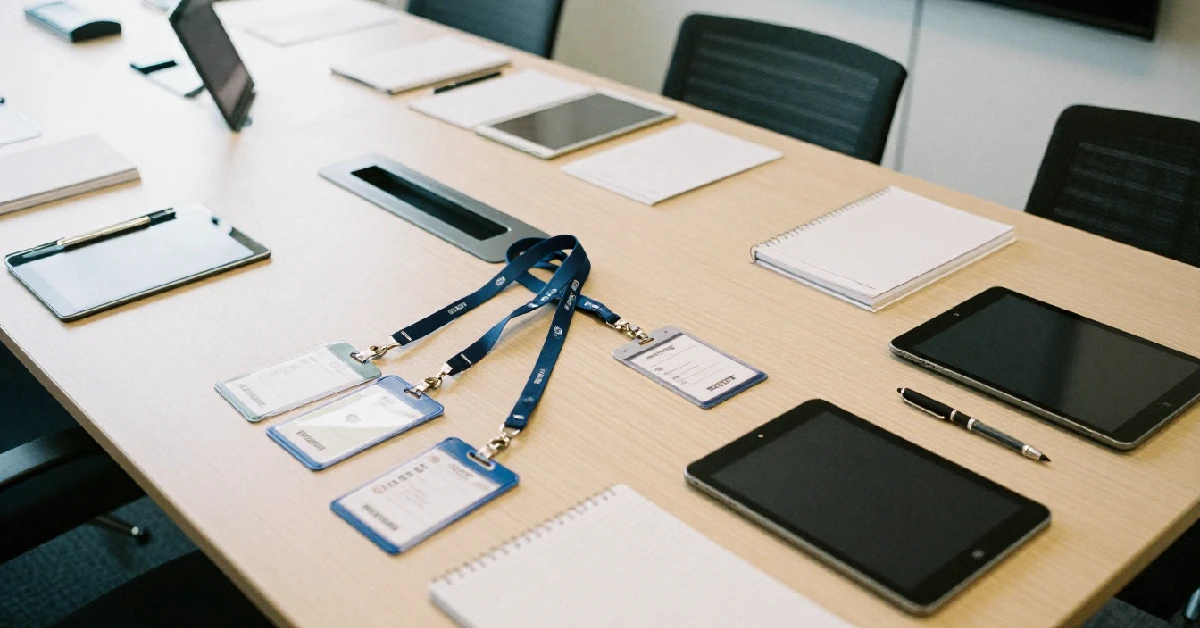
Name badges and lanyards aren’t just decorative. They help with networking, security, and creating professional atmospheres. Color-coded badges can distinguish speakers, attendees, staff, and VIPs quickly.
Digital registration tools make everything smoother. Modern conference apps sync with calendars, send reminders, and provide real-time updates. Attendees appreciate having schedules and venue maps right on their phones.
Payment facilities at registration desks should accept multiple methods. Cash, cards, and digital payments give people flexibility. Nobody wants to run to an ATM before checking in.
Conference Materials and Printed Supplies
Printed materials create structure and clarity. Programs outline schedules, directional signage guides people around venues, and delegate packs provide reference materials. These basics can’t be skipped.
Swag bags remain popular for good reasons. Branded notebooks, pens, tote bags, and USB drives serve practical purposes while promoting sponsors. People actually use quality swag items for months after events.
Emergency supply toolkits save the day regularly. Extra name tags, markers, pens, tape, scissors, and various office supplies handle unexpected situations. Running out of basic supplies looks unprofessional and creates unnecessary problems.
Backup copies of all printed materials should exist somewhere safe. Printers jam, files get corrupted, and accidents happen. Having extras prevents panic when something goes wrong.
Must-Have Items for Conference Attendees
Attendees need their own conference essentials too. Smartphones top the list since they handle communication, note-taking, photography, and app access. But phones die quickly with heavy use.
Chargers and portable power banks become lifesavers during long conference days. Bringing extra charging cables prevents the frustration of dead devices during important sessions.
Business cards still matter in professional settings. Digital contact sharing exists, but physical cards remain the quickest networking tool. They fit in pockets and don’t require app downloads or Wi-Fi connections.
Other useful attendee items include:
- Tablets or laptops for detailed note-taking
- Comfortable shoes for walking between sessions
- Water bottles to stay hydrated
- Breath mints for close networking conversations
- Small notebooks as phone backups
Day-of-Conference Execution Essentials
Conference day execution requires detailed coordination. Pre-conference briefings with volunteers and session chairs align everyone on procedures and expectations. Clear communication prevents confusion and mistakes.
Social media monitoring during events provides real-time feedback. Organizers can address issues quickly and amplify positive moments. It also helps attendees who post questions or concerns online.
Troubleshooting procedures and key contact lists must be accessible to all staff members. When problems arise, people need to know exactly who handles what.
Tech support presence throughout the venue is non-negotiable. Audio issues, presentation problems, and connectivity troubles need immediate attention. Dedicated tech staff can fix most problems in minutes if they’re available.
Room Setup and Venue Configuration Essentials
Room layout affects engagement and comfort significantly. Furniture arrangements should match session types, whether that’s theater style, roundtables, or classroom setups. Different sessions often need different configurations.
Room booking systems prevent double-bookings and scheduling conflicts. Digital displays outside rooms showing current sessions help attendees navigate large venues easily.
Basic supplies like whiteboards, functional markers, and visible clocks support presenters and keep sessions on track. Time management becomes easier when everyone can see what time it is.
Accessibility considerations can’t be afterthoughts. Wheelchair access, hearing assistance devices, and clear pathways ensure everyone can participate fully. Inclusive design benefits all attendees, not just those with specific needs.
Post-Conference Essentials and Follow-Up
The work doesn’t end when conferences conclude. Gathering attendee feedback through surveys captures fresh impressions and improvement ideas. People respond better immediately after events than weeks later.
Thank you communications to speakers, sponsors, volunteers, and attendees show appreciation and maintain relationships. These connections often lead to future collaborations and attendance.
Archiving conference materials creates valuable resources for future planning. Session recordings, presentation slides, attendee lists, and budget documents help organizers improve next time. Learning from each event makes the next one better.
Social media wrap-ups extend conference reach beyond physical attendees. Sharing highlights, photos, key takeaways, and thank-yous keeps momentum going. It also builds excitement for future events.
Conclusion
The conference essential isn’t complicated, but it does require attention to detail. From pre-planning through post-event follow-up, each phase has specific needs that contribute to overall success. Getting the basics right makes everything else easier.
Organizers who master conference essentials create memorable experiences. Attendees who pack smart get more value from every session. And venues that provide proper equipment support everyone’s goals.
Ready to plan your next conference? Start by reviewing this guide and creating your own essential checklist. Every successful event begins with proper preparation and the right tools. The difference between good conferences and great ones often comes down to remembering the essentials that matter most.