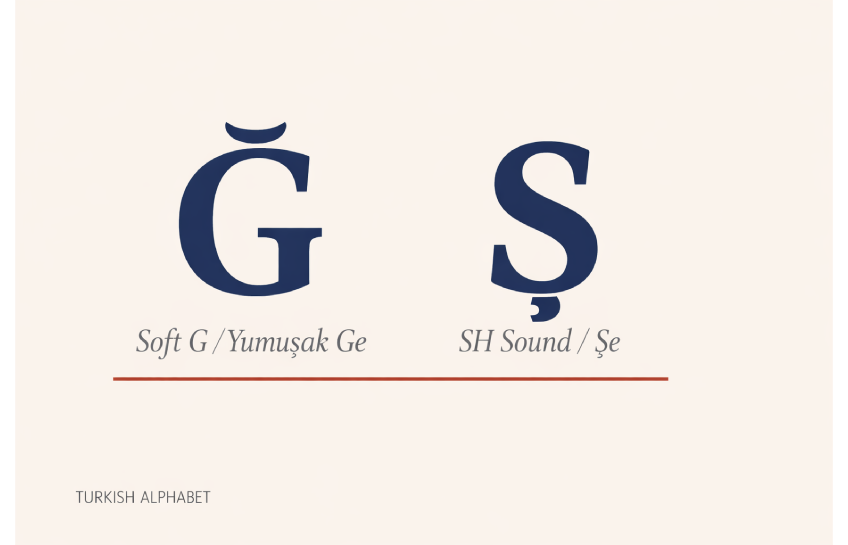
If you’ve ever come across Ğş and wondered what it means, you’re not alone. These two characters — Ğ and Ş — belong to the Turkish alphabet and represent some of its most distinctive features. Ğ is a near-silent letter that stretches vowels, while Ş delivers a crisp “sh” sound. This article walks you through what each letter does, why they exist, how Turkish learners typically struggle with them, and how to type them correctly on modern devices. By the end, you’ll have a clear, practical understanding of both.
What Is Ğş?
Ğş isn’t a Turkish word. It’s a pairing of two special letters — Ğ and Ş — that frequently appear together in linguistic discussions, keyboard encoding tests, and language learning resources. Think of it as a shorthand label for two characters that sit at the heart of Turkish phonetics.
Ğ is called yumuşak ge, which translates directly to “soft g.” Ş, meanwhile, sounds exactly like the English “sh” in shoe or shower. Together, they represent opposite ends of the Turkish sound spectrum: one that’s barely audible, and one that’s sharp and clear.
The 1928 Alphabet Reform
To understand why Ğş exists, you need a quick look at history. In 1928, as part of Atatürk’s sweeping modernization reforms, Turkey replaced its Arabic script with a Latin-based alphabet. The new Turkish alphabet has 29 letters — seven of which were modified from standard Latin characters to fit the phonetic needs of the language. Ğ and Ş were both part of that group.
The goal was straightforward: make spelling match pronunciation, increase literacy, and standardize written Turkish across the country. It worked. Literacy rates climbed sharply in the decades that followed. And beyond Turkey’s borders, the Turkish alphabet later became a model for other Turkic languages — Azerbaijan adopted a Latin-based script in 1991, Turkmenistan in 1993, and Kazakhstan in 2021.
The Letter Ğ: Soft G Explained
Ğ is arguably the most unusual letter in the Turkish alphabet. Historically, it represented a guttural sound — a voiced velar or uvular fricative, similar to the throaty “gh” in some Arabic or Azerbaijani words. But in modern standard Turkish, that sound has mostly disappeared.
Today, Ğ acts more like a vowel modifier than a true consonant. It never appears at the start of a Turkish word. When it sits between vowels, it creates a smooth, flowing transition rather than a hard stop. Its exact effect depends on the vowels around it:
| Position of Ğ | Effect |
|---|---|
| After back vowels (a, ı, o, u) | Lengthens the preceding vowel |
| After front vowels (e, i, ö, ü) | Produces a soft “y” glide sound |
| Between two vowels | Creates a smooth vowel transition |
So in a word like dağ (mountain), the Ğ simply stretches the “a” — you say “daaa,” not “dag.” And in eğlence (fun, entertainment), it produces a soft “y” quality between the vowels.
The Letter Ş: Clear and Consistent
Ş is much simpler. It consistently represents the “sh” sound — the same one you hear in English words like shake or ship. There’s no ambiguity, no positional variation. It sounds the same wherever it appears in a word.
Common Turkish words with Ş include şeker (sugar), şarkı (song), and şehir (city). Once you know the sound, you’ll start spotting it everywhere in written Turkish. And unlike Ğ, which requires a bit of phonetic context to pronounce correctly, Ş is immediately learnable — hear it once, and you’ve got it.
How These Two Letters Shape Turkish Phonetics
Turkish is widely considered a phonetic language, meaning words are generally pronounced exactly as they’re spelled. Ğ is the notable exception to that rule — it’s a letter that often makes no sound at all, yet it changes how surrounding vowels behave. That makes it functionally important even when it’s acoustically invisible.
Ş, on the other hand, reinforces Turkish phonetics perfectly. It fills a gap that standard Latin letters can’t — “s” and “h” separately don’t produce the same clean “sh” sound in Turkish orthography. Together, Ğ and Ş show how deliberately the 1928 alphabet was designed: each character exists for a specific phonetic reason, not as decoration.
Why Do Learners Struggle With Ğ and Ş?
One of the most common mistakes among Turkish learners is swapping Ğ for a regular G, or replacing Ş with a plain S. It feels minor, but it can shift pronunciation enough to cause confusion — or completely change a word’s meaning.
The bigger challenge with Ğ is that you often can’t hear it in spoken Turkish. In the Istanbul dialect — which is the standard — Ğ has been reduced to near-silence. So learners listening to audio might not even notice it’s there. The fix? Slow, deliberate listening practice combined with reading aloud from transcribed texts. Flashcard apps that show Turkish spelling alongside audio are especially useful here.
Ş is easier to crack, but learners whose native languages use “sh” as two separate letters — like English or German — sometimes instinctively type or write “sh” instead. Repetition and muscle memory are the cure.
Typing Ğ and Ş on Modern Devices
With digital communication being so central to everyday life, typing Ğş correctly matters more than ever. Many users replace Ğ with G and Ş with S when texting or posting online — often because their keyboard doesn’t support Turkish characters. But this creates real problems, especially in search engines and formal writing.
The fix is simple. On Windows, go to Settings → Time & Language → Language and add Turkish as an input language. On Mac, go to System Settings → Keyboard → Input Sources and add the Turkish keyboard. On iOS and Android, adding Turkish as a keyboard language unlocks all special characters directly on the touchscreen.
For SEO specifically, using the correct letters matters. A search for şarkı and a search for sarki return different results. Correct spelling builds accuracy, credibility, and search relevance — all at once.
Ğ and Ş in Other Turkic Languages
Ğ isn’t exclusive to Turkish. It also appears in Azerbaijani, Zazaki, Laz, Crimean Tatar, Tatar, and Kazakh alphabets. In Azerbaijani, Ğ still represents an active consonant sound — the voiced velar fricative /ɣ/ — unlike in Turkish, where it’s mostly silent. And just like in Turkish, it never starts a word in Azerbaijani either.
Ş, meanwhile, carries a similar “sh” function across most Turkic alphabets that use it. This shared structure reflects the influence of the 1928 Turkish alphabet reform, which served as a practical blueprint for the official Latinization of several Turkic languages that had previously used Arabic or Cyrillic scripts.
Conclusion
Ğş points to two letters that do very different jobs. Ğ quietly shapes vowel sounds behind the scenes — often without making a sound at all — while Ş delivers one of Turkish’s most recognizable consonants. Both came from the 1928 alphabet reform, both appear across Turkic languages, and both trip up learners for different reasons. Getting them right — in pronunciation, spelling, and typing — is one of the most practical steps you can take toward reading and writing Turkish with real accuracy.