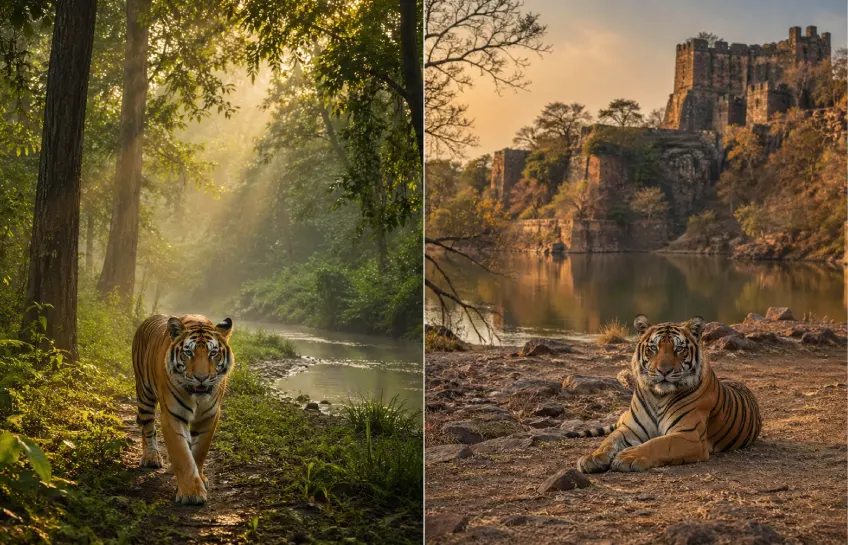
If you want to compare corbett and ranthambore for a 5 day wildlife photography trip in november on a 50k budget, you’re really choosing between two of India’s most loved tiger reserves with very different personalities. This guide breaks down the weather, safari styles, costs, and shot opportunities so a solo photographer can pick the right park without overspending. We’ll cover the budget math, a sample itinerary, and an honest verdict so you walk in knowing exactly what to expect.
Trip Overview and Constraints
Picture this: five days, one camera bag, and a ₹50,000 ceiling that has to cover trains or buses, four nights of stay, six to eight safaris, food, and park fees. It’s tight, but it’s doable if you start from a major city like Delhi and skip the flashy add-ons.
Set your expectations early. You’re not booking a luxury resort or a private jeep here. Think shared gypsy safaris, mid-range guesthouses or basic forest lodges, and an overnight train instead of cabs. The aim is sharp images and steady wildlife time, not pampered comfort.
Why November Works So Well
November is honestly the sweet spot for both parks. Days stay cool, mornings turn crisp and misty, and the post-monsoon greenery still hangs on before winter dries it out. Light becomes softer and more golden, which photographers love for clean tiger portraits and moody forest frames.
Animal activity picks up too. Tigers, deer, elephants, and resident birds move more freely in this weather, and water holes draw consistent traffic. Importantly, Corbett’s famous Dhikala zone reopens around mid-November, which lines up perfectly with this trip window.
Corbett and Ranthambore at a Glance
Here’s a quick side-by-side so you can spot the differences fast:
| Aspect | Corbett National Park | Ranthambore National Park |
|---|---|---|
| Primary setting | Dense sal forest, riverine landscapes, grasslands | Dry deciduous forest, rocky hills, open scrub |
| Signature frames | Elephants, rivers, forest moods, birds | Tigers on open tracks, ancient ruins, lakes |
| November conditions | Cool, green, freshly reopened core zones | Pleasant, dry, great visibility around lakes |
| Budget feel | Slightly easier on a tight wallet | Tighter due to higher safari demand |
Corbett feels like a richer, layered jungle full of mood and texture. Ranthambore feels open, dramatic, and far more “tiger-first.” Both are stunning in November, just in very different ways.
Wildlife and Photography Style
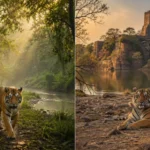
Ranthambore is famous for tiger-centric photography, and that reputation is earned. The terrain stays open, the lakes pull big cats out into clear sightlines, and the crumbling fort ruins create those iconic backdrops. If you want clean tiger-on-track frames or the classic “tiger at the lake” shot, this is your park.
Corbett plays a different game. Tigers are there too, but the magic comes from variety. You’ll see herds of wild elephants, kingfishers and crested serpent eagles, river crossings, and atmospheric sal forest scenes. It’s less about one perfect tiger close-up and more about telling a richer wildlife story.
How Do Safari Experiences Differ?
Both parks run morning and afternoon gypsy safaris with limited seats and zone-based bookings. You’ll need to plan zones in advance because permits sell fast in November.
Still, the on-ground feel is different. Corbett’s drives wind through thick forest and along rivers, so sightings can be quieter and more atmospheric. Ranthambore’s tracks loop around lakes and open plateaus, so you tend to spot animals from further away and earlier. For pure tiger odds in a five-day window, Ranthambore usually wins. For texture and visual range, Corbett wins.
Budget Breakdown for 5 Days on 50k
Let’s break a ₹50,000 trip into honest cost buckets for one solo traveler:
- Transport (return train or bus + local transfer): ~₹7,000–₹12,000
- Stay (4 nights, budget to mid-range): ~₹12,000–₹18,000
- Safaris (6–8 shared gypsy drives): ~₹18,000–₹28,000 depending on park, zone, and season
- Food and extras (tips, park fees, camera charges): ~₹5,000–₹8,000
Corbett can stretch a tight ₹50,000 a bit better, especially if you pick gates like Bijrani, Jhirna, or Dhela and stay in Ramnagar. Ranthambore is workable too, but you’ll need to be careful with safari counts and avoid weekend or premium-quota pricing that can balloon costs quickly.
Is Jim Corbett Better for This Trip?
Corbett wins for photographers who care about variety. If you want elephants splashing through rivers, dawn mist over forest tracks, and dozens of bird species along with a real chance of a tiger, this park gives you more visual range.
It’s also slightly kinder to a tight budget. Stays around Ramnagar are plentiful, shared safaris are easy to find, and you can mix core zones with cheaper buffer drives like Sitabani to save money. For a mood-driven, mixed wildlife portfolio, Corbett is hard to beat.
Is Ranthambore Better for This Trip?
Ranthambore makes more sense if your portfolio goal is tiger, tiger, tiger. The open landscape, well-known tigresses, and ruin-backed frames give you stronger odds of bagging that hero shot in just five days.
That said, you’ll need tighter cost control. Stick with shared gypsies, travel on weekdays, book under the regular advance quota instead of premium, and pick simpler stays in Sawai Madhopur. Skip the boutique resorts. With careful booking, Ranthambore fits inside ₹50,000 and rewards you with bold, iconic big-cat images.
Practical Planning Tips for Photographers
Book your safaris and permits early. November is busy, popular zones sell out, and last-minute prices can wreck your budget. Use the official forest portals and reserve at least three to four weeks ahead. As of 2026, Corbett has gone fully digital with QR-code permits, so save them on your phone.
Pack smart for cold mornings. A telephoto lens (200–600mm), a fast mid-range zoom, a beanbag or monopod for the gypsy, and plenty of batteries and memory cards are essentials. Add layered clothing in muted earth tones, gloves for early starts, and a rain cover just in case.
Sample 5-Day Itinerary on 50k
Here’s a simple skeleton that works for either park. Day 1: Travel from your home city, reach the gateway town by evening, and prep your gear. Day 2: Morning and afternoon safari in core zones. Day 3: Repeat with two different zones for visual variety.
Day 4: One safari plus a lighter half-day for birding, river walks, or local scouting. This rest break helps your editing and keeps costs under control. Day 5: Final morning safari, then travel back. Adjust zone choices for Corbett (Dhikala, Bijrani) or Ranthambore (Zones 2, 3, 4) based on what’s open and bookable.
Which Park Should You Choose? (Verdict)
The honest trade-off is this. Ranthambore gives you higher tiger chances and dramatic, frame-worthy big-cat shots. Corbett gives you richer variety, atmospheric forests, and elephants tossed in for the same money.
Decide based on your shot list. If your portfolio needs strong tiger headshots, go Ranthambore. If you want a mixed wildlife and landscape body of work, Corbett is the smarter pick within ₹50,000.
Conclusion
Both parks work beautifully for a 5-day November photography trip if you plan transport, safaris, and stays with a clear head. Book early, travel on weekdays where possible, and avoid luxury add-ons that quietly eat into your safari count.
Match the park to your photography goal, not the other way around. Whether you chase Ranthambore’s tigers or Corbett’s layered jungle, ₹50,000 is enough to come home with a portfolio you’ll genuinely be proud of.